
Products Details
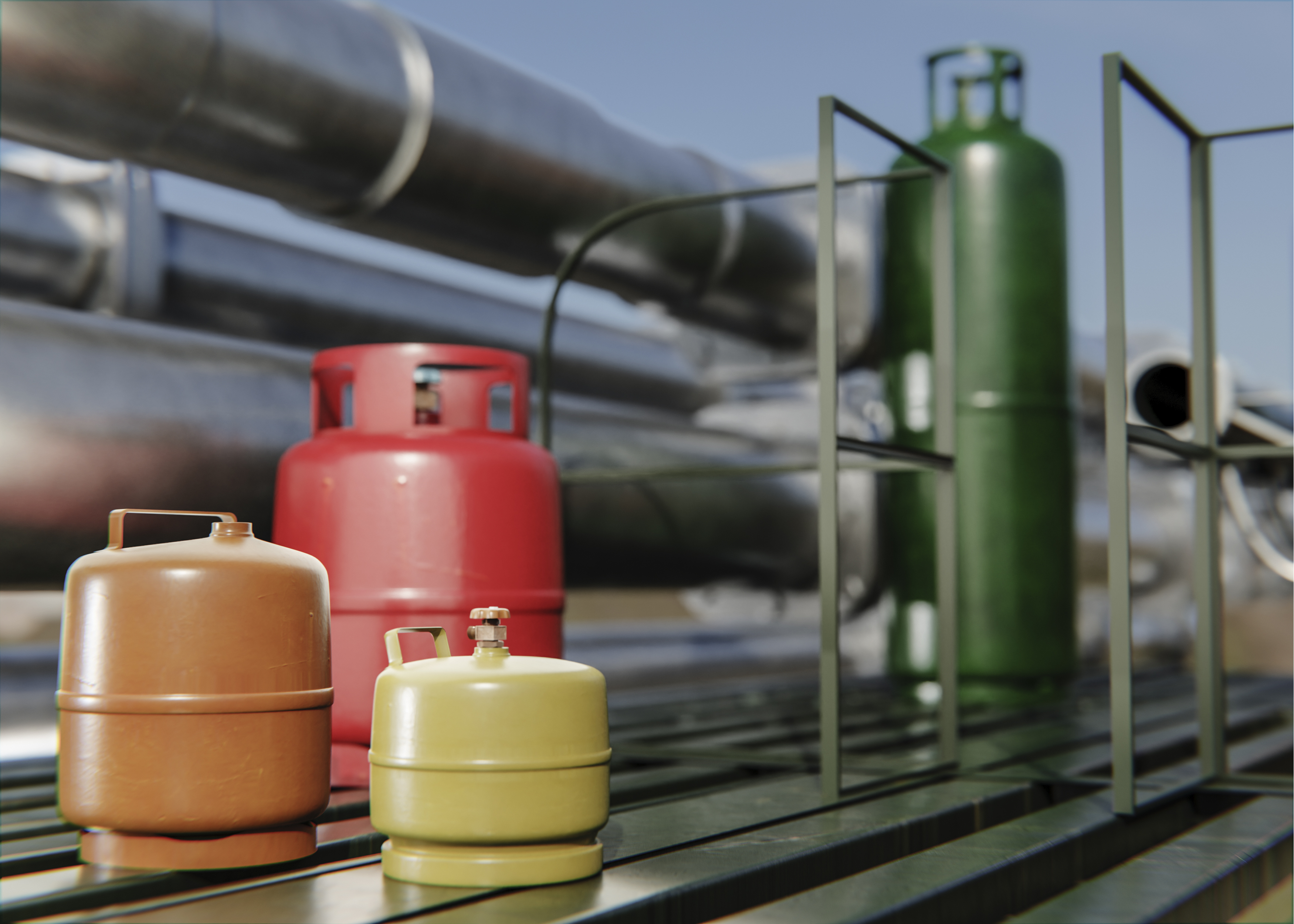
Liquefied Natural Gas (LNG)
Liquefied Natural Gas (LNG) is natural gas cooled to a liquid state for efficient storage and long-distance transportation. Its high energy density and clean-burning properties make it a key fuel for global energy markets.
Product Description
Liquefied Natural Gas (LNG) is primarily composed of methane (CH₄), with small amounts of ethane and other hydrocarbons. It is produced by cooling natural gas to approximately –162°C, reducing its volume significantly and enabling safe, non-pressurized storage and transport.
LNG is odorless, colorless, non-toxic, and non-corrosive, making it suitable for large-scale energy distribution. Before liquefaction, impurities such as water, acid gases, and heavy hydrocarbons are removed to ensure product stability and prevent damage to equipment during storage and transport.
LNG is widely used for transporting natural gas across regions where pipeline infrastructure is not feasible. Once delivered, it is regasified and distributed for industrial, commercial, and energy applications.
Key Features
High Energy Density
Offers significantly higher volumetric energy density compared to compressed natural gas (CNG), enabling efficient long-distance transport.
Clean-Burning Fuel
Lower emissions compared to conventional fossil fuels, supporting cleaner energy applications.
Efficient Storage & Transport
Liquefaction reduces gas volume substantially, making LNG suitable for marine and bulk transport.
Global Energy Utility
Widely used across power generation, industrial fuel systems, and gas distribution networks.
Technical Requirements
Storage & Handling Guidelines
- Store in specialized cryogenic tanks designed for LNG
- Maintain temperature at approximately –162°C for liquid state
- Prevent exposure to heat sources and ensure insulated handling systems
- Avoid contamination with water, air, or other impurities
- Handle in accordance with LNG safety and cryogenic handling standards
- Ensure proper ventilation to prevent gas accumulation in case of vaporization
Product Specifications (Russian LNG Reference)
Energy Content
- Gross Heating Value (GCV): 9,340 – 10,420 Kcal/SCM
- Equivalent: 1,050 – 1,170 BTU/SCF
Composition
- Methane (CH₄): Min 85.0 mol%
- Ethane (C₂H₆): Max 9.2 mol%
- Propane (C₃H₈): Max 3.0 mol%
- Butanes & Heavier: Max 2.0 mol%
- Pentanes & Heavier: Max 0.25 mol%
- Nitrogen: Max 1.0 mol%
Sulfur Content
- Total Sulfur: Max 10 ppm
- Hydrogen Sulphide (H₂S): Max 10 ppm
Performance Index
- Wobbe Index Variation: ±5%
Contaminants (Trace Limits)
- Heavy Metals (Total): Max 1.0 ppm
- Lead + Zinc: Max 0.50 ppm
- Sodium + Potassium: Max 0.30 ppm
- Vanadium: Max 0.50 ppm
- Calcium: Max 2.0 ppm
- Magnesium: Max 2.0 ppm
Solids & Particulates
- Up to 10 micron: Max 20 ppm
- Above 10 micron: Max 1.5 ppm
- Fine particles: Max 0.30 ppm
Moisture & Liquids
- Moisture: 112 kg/million SCM
- Liquid Content: Nil
Additional Components
- Hydrogen: Max 1.0% (vol)
- Acetylene: Max 0.10% (vol)
- Higher Hydrocarbons (n ≥ 3): Max 10% (vol)
- Power generation and energy utilities
- Industrial fuel and heating applications
- Gas distribution networks (after regasification)
- Marine fuel (LNG-powered vessels)
- Long-distance energy transport and trading
- Enables cost-effective long-distance gas transportation
- Lower emissions compared to conventional fuels
- High energy output supports large-scale energy needs
- Flexible usage across industrial and energy sectors
- Reliable supply for global energy markets
- Supports transition toward cleaner energy solutions